Car Crashes Are Scarier Than Spiders: What Feels Scary vs What’s Actually Risky
My nine-year-old granddaughter said this to me after she, her brother, and Paul were in a car accident. The car is probably a write-off. Thank goodness, no one was hurt.
“Car crashes are scarier than spiders, Nanny.”
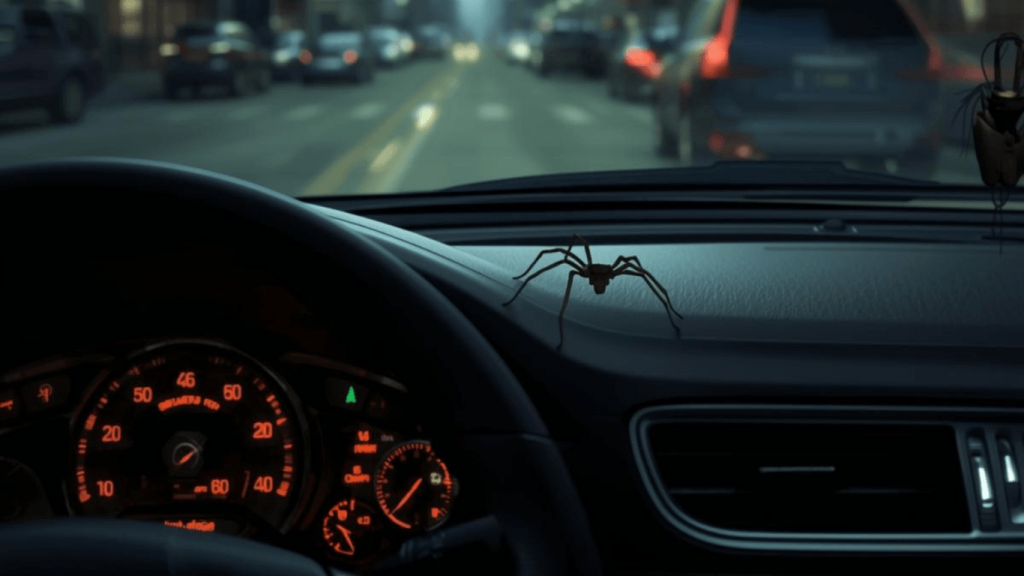
This is a kiddo who is absolutely terrified of spiders. Won’t go near them. Screams when she sees one. Runs the other way at the speed of light.
But she said those words — and they stayed with me.
When I picked them up from school that afternoon, both kids still had “a squishy feeling in their tummies.” They were nervous getting into my car. A bit shaky. Tummies upset.
I explained accidents and risk in simple terms. Paul talked about getting back on the horse.
That first ride home? They were scared.
But when we arrived safely, the feeling eased.
And here’s what I noticed: that first car ride restored more than comfort.
It restored confidence.
They proved to themselves they could handle it.
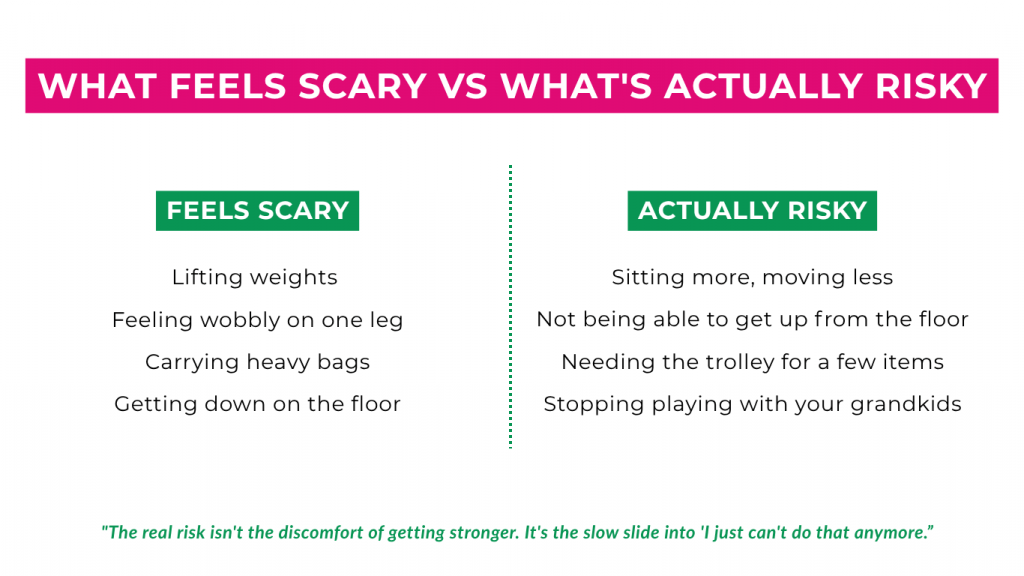
What Feels Scary vs What’s Actually Risky
We avoid things that feel scary — not necessarily the things that are actually risky.
Spiders? Mostly harmless.
Getting in a car? Statistically one of the most dangerous things we do every day.
The kids knew the crash was the real risk — they felt it in their bodies. But within one safe trip, they were back to normal. They faced the scary thing, realised they could handle it, and their confidence returned.
But when it comes to our ageing bodies?
We often do the opposite.
We avoid lifting weights. Balance exercises. Anything that feels uncomfortable, hard, or intimidating.
Yet the real risk is quieter.
Sitting more.
Moving less.
Letting strength decline because we’re avoiding discomfort.
Not being able to get up from the floor without using your hands — that’s a warning sign.
Needing to sit to put your shoes on because your balance isn’t great — that’s the spider in the corner you’re ignoring.
Using the shopping trolley when you only need a few items because carrying bags feels too heavy — that’s the risk creeping in.
These changes don’t arrive dramatically. They arrive slowly.
And they feel like, “Well… that’s just ageing.”
The Spider We Should Be Paying Attention To
Last week, one of my clients told me she had stopped getting down on the floor to play with her grandkids because it had become too hard to get back up.
She didn’t decide to stop.
She just… did.
One day she realised it had been months since she’d been on the floor.
That’s the spider.
Not lifting heavy dumbbells.
Not trying something new.
Not feeling wobbly the first time you stand on one leg.
The real risk is the slow slide into:
“I just can’t do that anymore.”
My grandkids got back in the car because they had to. And they survived it.
The fear eased. Their confidence returned.
With our bodies, we do have a choice.
So we avoid.
We take the easier option.
We don’t get back on the horse.
No one is making us.

The Confidence Connection
Here’s what nobody talks about.
When you lose physical capability, you don’t just lose what you can do.
You lose confidence in your body.
Sometimes even in yourself.
My client didn’t just lose the ability to play on the floor. She lost trust.
Now she second-guesses other things.
“Can I walk on that uneven path?”
“Should I reach for that high shelf?”
“What if I can’t keep up?”
This is what I mean by Ageless Confidence.
It’s not pretending you’re 30 when you’re 60.
It’s not positive thinking while your body quietly declines.
It’s maintaining the capability that lets you trust yourself.
When you can stand on one leg to put your shoes on, you trust your balance.
When you can get up off the floor easily, you trust yourself to play.
When you can carry your groceries, you trust your independence.
Movement doesn’t just keep you strong.
It keeps you confident.
Avoid once.
Avoid twice.
Avoid long enough and it becomes your normal.
And often, the confidence erosion is worse than the capability loss.
What I Notice Now
These days, I notice different things.
I notice when I’m choosing the easy option — sitting to put on my shoes when I could stand, parking closer when I could walk further.
But I also notice something deeper.
Sometimes it’s not that I can’t.
It’s that I’m not sure I can.
That’s different.
That’s a confidence problem, not a strength problem.
Sometimes I catch myself and ask:
“Is this because I need to… or because I’m avoiding something that’s gotten harder?”
And sometimes I still choose the easy option — because I’m tired, or in a hurry, or just human.
That’s fine.
But I’m paying attention.
Because not noticing until it’s too late — that’s what actually scares me.
Car Crashes Are Scarier Than Spiders
My granddaughter was right.
Car crashes are scarier than spiders.
And losing your capability slowly, one avoided challenge at a time, is scarier than the temporary discomfort of getting stronger.
But losing confidence in your body?
That might be the scariest thing of all.
Because once you stop trusting your body, you stop trying.
And that’s when the real decline begins.
Move Moment
This week, pick one thing you’ve been avoiding because it feels uncomfortable.
Stand to put your shoes on.
Carry the bags.
Get down on the floor — and back up again.
You don’t have to do it perfectly.
You just have to prove to yourself that you still can.
The scary feeling fades when you face it.
And confidence returns when you prove you can handle it.
Face the right scary thing.
PS. We're afraid of the wrong things. Here's what to actually pay attention to.