Wildflowers Don't Need Perfect Conditions (And Neither Do You)
I just finished reading Drew Barrymore’s “Wildflower” and it was captivating. But I’ll be honest – it took me a minute to get into the groove.
The book jumps around in time. One chapter she’s a child, the next she’s in her thirties, then back to her teens. It’s not linear. At first, I found myself having to keep up, re-orienting myself to where we were in her life.
But once I got the rhythm of it? I was right into it.
And certain things hit me hard. There were aspects of Drew Barrymore’s life that I related to on different levels. No-one’s life is the same, but some of her truths resonated with my own.
Growing Where You’re Planted
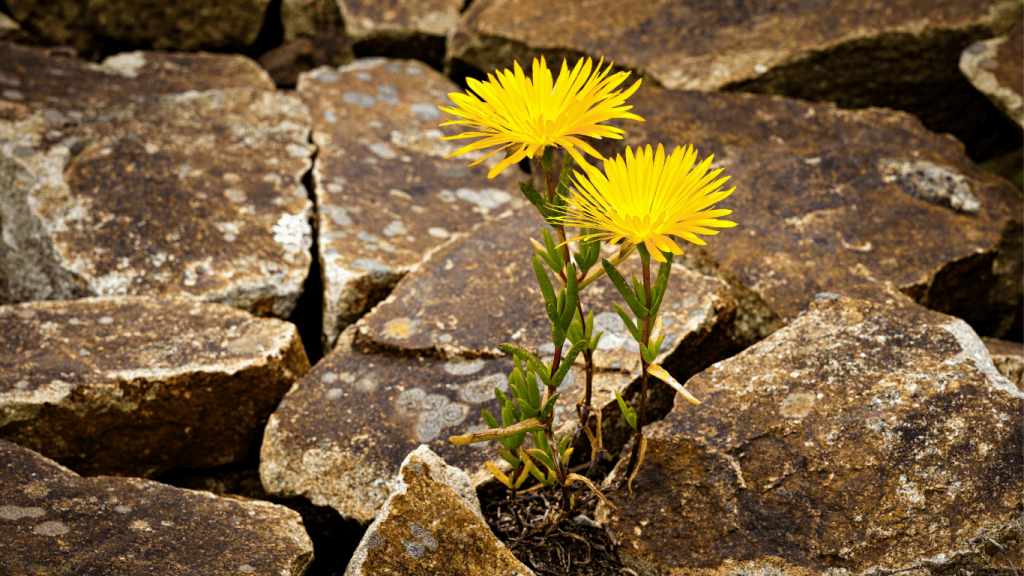
The whole concept of “wildflower” is about this: growing where you’re planted, even in difficult circumstances. Not needing ideal conditions to survive and keep going.
Drew didn’t have ideal circumstances. Not even close. But she kept growing anyway. She adapted. She survived. She created something from what she had.
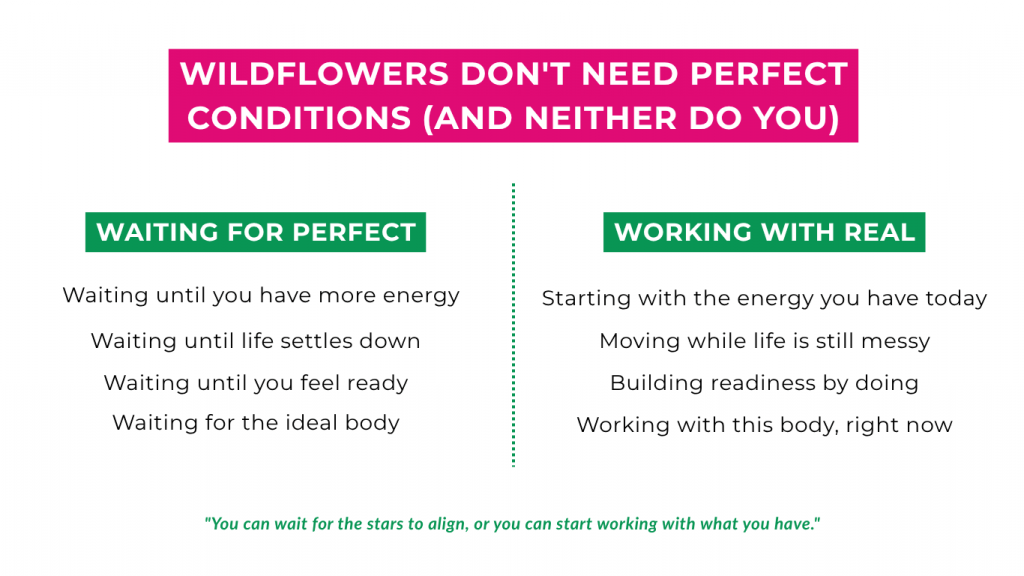
And here’s what that made me think about: we get stuck waiting for perfect conditions.
We wait for the right time to start exercising. We wait until we have more energy. We wait until life calms down. We wait until we feel ready.
We get stuck in one place – physically, mentally, emotionally – because we’re waiting for things to improve before we move.
But here’s the truth: you’ll never feel the excitement and scariness of moving if you’re always waiting for everything to align perfectly.
Moving – literally and metaphorically – requires you to leave where you are. To try something new. To adapt to a new place, a new way of being.
And that’s uncomfortable. It requires grieving what you’re leaving behind. It requires work to adapt to the new place.
But it’s worthwhile.
I’ve moved a lot in my life. Not just physically, but in how I live, how I work, who I am. And every move required me to grieve the old and adapt to the new. That work isn’t optional. But it’s how you keep going.
Your body is where you’re planted right now. Not some ideal version. Not the body you had at 30 or 40 or even 50. This body. Right here. Right now.
You can wait for the stars to align, or you can start working with what you have.
Creating Your Own Version
Drew’s honesty about not having a traditional family struck me. She didn’t have the Hollywood childhood people imagine. She didn’t have the stable, supportive family structure.
So she created her own version. Her own definition of what family and support could look like.
I resonated with this immediately.
I moved out at 15. Never lived with my parents again after that. I felt like a stranger in my own home. I was different. And that’s because I was. We all are. But mine was specific – my father wasn’t my father, and I wasn’t told this until I was getting married at 17.
There were things about how I was treated that I didn’t like. Things I didn’t understand for a long time.
Now I do. Knowing more about my parents’ lives, I understand why certain things happened the way they did. That doesn’t make it all okay. But it gives me perspective.
And here’s what I learned: you take the best bits and you change what you need to.
I just said this to my young niece. She’s in her early 20s, about to have a child for the first time. And I told her: you don’t have to repeat the patterns that didn’t work for you growing up. You can take what was good and leave the rest. You can create your own version.
That’s what Drew did. That’s what I did. That’s what we all have to do, really.
Because nobody gets a flawless blueprint to follow. Nobody gets the way it should be. We all get complicated, messy, imperfect circumstances.
And we make something of it anyway.
Now I’m raising my grandkids. Not blood grandkids – stepdaughter’s children. But they’re in my care. They live with us. We’re responsible for them.
That’s my version of family. We both have raised families and now we have an additional version of an extended family. It doesn’t look like what anyone planned. But it’s what we have. And we’re making it work.
The Image vs. The Reality
Drew talks about the disconnect between the Hollywood image and the reality of her life. The pressure to maintain an image that has nothing to do with who you actually are or what you’re actually dealing with.
And this made me think about what I’m seeing on social media right now. All these posts about “finding yourself” and “giving yourself time and space” and “being gentle with yourself.”
And honestly? It annoys me.
Not because those things aren’t important. But because the way it’s packaged doesn’t land with me. Like someone read it somewhere and is now repeating it because it sounds good. Even when people have genuinely lived through hard things, the social media version strips out all the mess and makes it sound like a gentle journey.
That’s not my experience. And it doesn’t resonate.
Here’s what Drew’s book showed me: there’s brutal work involved in creating a life that works for you.
Brutal work.
It’s not about finding yourself through meditation and journaling and self-care Sundays. It’s about making hard choices. Facing uncomfortable truths. Doing things that scare you. Adapting when circumstances force you to change.
Most women aren’t prepared for how hard that work actually is. Because the social media version makes it sound peaceful and gentle and nurturing.
The reality? It’s messy. It’s uncomfortable. It requires you to face things you’d rather avoid.
Drew went to court at 14 to be emancipated from her parents. That’s not gentle. That’s survival. That’s taking responsibility for yourself when nobody else will.
I moved out at 15. Same thing. Not a beautiful journey of self-discovery. Just necessity. Just doing what I had to do to keep going.
The image we see – whether it’s Hollywood or Instagram – rarely matches the reality of the work required to build a life.
And I think we do women a disservice when we pretend it’s easier than it is.
Being a Mother Changes Everything
Drew wrote about how becoming a mother shifted everything for her. Her whole perspective changed. Her priorities realigned.
I get that completely.
Being a mother changes everything. I would give my life for my children. I don’t think I would say that about anyone else in my life, even people I’m extremely close to.
There’s something about being responsible for a life you created that shifts your entire orientation to the world.
But now I’m experiencing something different: being a grandmother raising grandkids.
And it’s so different from being a mother.
For one thing, these aren’t my blood grandchildren. My stepdaughter’s children. But I’m raising them. They live with me permanently. I’m the one getting them ready for school, helping with homework, dealing with the squishy feelings in their tummies after car accidents.
I’m doing it all again in my mid-60s. With a body that’s different from the one I had when I raised my own kids.
And I’m doing it with all the wisdom and all the mistakes of having done it once before. I know more now. I’m clearer about what matters and what doesn’t. I’m more confident in my instincts.
But I’m also more tired. More aware of my limitations. More conscious that I need to take care of my own body if I’m going to keep up with these kids.
It’s a different challenge. Not better or worse than being a mother the first time around. Just different.
And like everything else in life, you don’t get to choose your conditions. You just work with what you have.
The Confidence Connection
Here’s what Drew Barrymore’s story reinforced for me: Ageless Confidence isn’t about perfect conditions.
It’s not about having it all figured out. It’s not about having ideal circumstances. It’s not about waiting until everything aligns perfectly.
It’s about working with what you have. Where you are. Who you are.
Drew didn’t wait for things to be perfect before creating a life. She worked with the difficult, messy, imperfect circumstances she was given.
I didn’t wait for the ideal family situation or the right time to leave home or everything to line up perfectly. I just did what I had to do with what I had.
And now, raising grandkids in my mid-60s? This isn’t how I imagined things would be. But it’s my reality. So I work with it. And let me tell you, it’s a roller coaster ride. Some days are lovely and other days I simply want to forget they happened.
That’s what confidence actually looks like. Not certainty. Not perfection. Not having all the answers.
Just trusting that you can handle what comes. That you can adapt when circumstances change. That you can create something workable from imperfect conditions.
And here’s the fitness piece: your body is never going to be in perfect condition again. And quite frankly –— was it ever? I know I never worried about how I moved and what I ate when I was younger, it. It was just as it was.
If you’re waiting for the right time – when you have more energy, when you feel better, when life settles down – you’re going to be waiting forever.
Perfect conditions don’t exist. Not for your body. Not for your life. Not for anything.
But you can still get stronger. You can still be capable. You can still build confidence in what your body can do.
Right here. Right now. In the imperfect conditions you’re actually living in.
That’s the work. Not waiting for perfect. But working with real.
What This Book Made Me Think About
I didn’t pick up Drew Barrymore’s book thinking it would connect to fitness or ageing or confidence. I just wanted to read her story.
But here’s what I took away:
Stop waiting for everything to be just right before you start moving. You’ll never feel the excitement and scariness of change if you’re always waiting.
Create your own version of what works. Take the best bits from what you were given and change what doesn’t serve you.
Be honest about the brutal work required. The social media version of transformation is a lie. Real change is messy and uncomfortable.
Trust that you can handle what comes. Being a mother changes you. Being a grandmother raising kids in your mid-60s changes you again. You adapt because you have to.
And most importantly: you don’t need ideal circumstances to keep growing.
Wildflowers don’t. And neither do you.

Move Moment
This week, notice where you’re waiting for perfect conditions.
Maybe it’s waiting for more energy to start exercising. Maybe it’s waiting for life to calm down before you try something new. Maybe it’s waiting until you feel ready to make a change.
Ask yourself: What if things never line up perfectly? What if this – right now, with all its imperfections – is what you have to work with?
Then ask: What can I do with these conditions?
Not what you wish you could do in ideal circumstances. What you can actually do right here, right now, in the messy imperfect reality of your life.
That’s where the work happens. Not in perfect conditions. In real ones.
Start there.
And maybe, just maybe… go get Wildflower and take a read for yourself.
PS. The beauty of a wildflower is that she found a way to grow anyway. You can too — the moment you stop waiting for perfect.