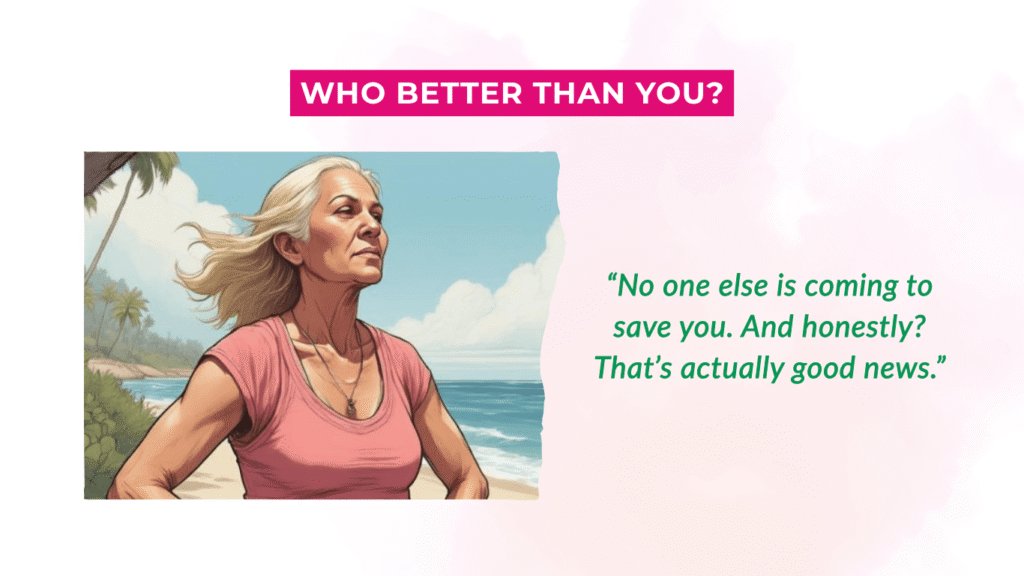
Who Better Than You? No One’s Coming to Save You
I just finished Will Packer’s “Who Better Than You” and it was wildly entertaining.
Will Packer is different. He sings to his own song. He didn’t follow the traditional Hollywood path – he created his own lane and made it work through sheer determination and smart pivots.
But what stopped me in my tracks wasn’t just his story. It was the title itself.
“Who Better Than You?”
Think about that for a minute. Who better than you to take responsibility for your life? Who better than you to make changes? Who better than you to do the work?
The answer is: no one.
No one else is coming to save you. And honestly? That’s actually good news.
No One Else Is Coming (And I Had to Learn This Too)
When the grandkids came to live here permanently, I thought I was fit and active. And I was. But I never realised how Mother Nature works against you and lets you slow down without you noticing.
I was on the decline. And I genuinely thought it would get better by itself.
Then one day, I was doing walkouts to push-ups – something I’d done countless times before. And I was more puffed than I should have been. More tired than made sense.
That was the sign. That was my body telling me: if you keep going like this, you might not be getting up off the ground in a few years’ time.
And I realised: who was I waiting for?
My past self? That version of me who was super fit, strong, active? She wasn’t there anymore. But I was.
I had to stop waiting for my body to fix itself. I had to stop hoping it would get better on its own. I had to take responsibility.
Because here’s the truth: no one else was coming to fix this for me.
I see this pattern with women all the time. Waiting for the doctor to prescribe something that solves everything. Waiting for the perfect programme that does the work for them. Waiting for circumstances to improve before they take action.
I get it. I was there too.
But the truth Will Packer’s book reinforced: no one else is coming.
The doctor isn’t going to fix your fitness. The programme isn’t going to do the work for you. No one is going to hand you capability and strength.
Who better than you to take responsibility for your own body?
You’re the one living in your body every day. You’re the one who knows what’s getting harder, what’s starting to hurt, what you’re avoiding because it’s become too difficult.
You’re the best person – the ONLY person – who can decide to do something about it.
Will didn’t wait for Hollywood to hand him success. He went out and created it himself. He bet on himself when no one else would.
And that’s what you have to do with your body. Bet on yourself. Take responsibility. Stop waiting for someone else to fix it.
Believing in Yourself (Without the Sugar-Coating)
Will Packer’s book is about believing in yourself. But it’s not the sugar-coated version you see on social media.
It’s not about affirmations and vision boards and gentle self-care.
It’s about taking massive action. Making hard choices. Doing things that scare you. Betting on yourself even when you’re not sure it’ll work.
Here’s what I’ve learned: you’re either in the sugar-coating box or you’re not. There’s no middle ground on this one.
Either you want the truth about what it takes, or you want the comfortable lie that it’s easier than it is.
Believing in yourself doesn’t mean hoping things get better. It means doing the work required to make them better.
Will didn’t just believe he could succeed. He took action. He made things happen. He adapted when things didn’t work.
That’s what believing in yourself actually looks like. Not positive thinking. Action.
And with your body, it’s the same thing. You can believe you’re capable all you want. But if you’re not doing anything about it, that belief is meaningless.
Take Alice, one of my clients. She felt like she was going backwards. Her strength was declining. She knew it. But she kept waiting – waiting for more time, waiting for better circumstances, waiting for it to somehow fix itself.
Then she stopped waiting. She found 10 minutes in the morning. She started doing push-ups when she went to the bathroom. Not Instagram-worthy. Not perfect. But she did it.
Two weeks later, she lifted heavier in our PT session than she’d been able to lift in months.
Who better than Alice to take responsibility for her own strength? No one. She did the work. She got the results.
Believing in yourself means showing up. Doing the work. Even when it’s hard. Even when you don’t feel like it. Even when progress is slow.
That’s the non-sugar-coated version. And it’s the only version that works.
Pivot When You Need To
One of the stories that stuck with me: Will pitched a movie idea. A young exec gave him feedback. And instead of being stubborn about his original vision, he pivoted. He re-pitched it differently. He adapted.
That’s not weakness. That’s smart.
I’ve had to do this myself recently. When the grandkids came to live here permanently, I couldn’t do my group sessions anymore. The timing with children doesn’t allow for it.
I could have been stubborn. I could have insisted on keeping things the way they were. I could have quit altogether because I couldn’t do it the old way.
But instead, I pivoted. My coaches could run the group sessions. I went all-in for my personal coaching clients. I’m still able to share this passion for taking care of yourself, just in different ways.
Like writing. It just might inspire someone.
Life doesn’t unfold according to your plan. Circumstances change. Things happen that you didn’t choose and didn’t see coming.
You can dig your heels in and refuse to adapt. Or you can pivot.
Your body changes. Your energy changes. Your circumstances change.
Maybe you thought you’d be more active by now. Maybe you imagined you’d feel better, stronger, more capable. Maybe the plan was to maintain what you had in your 50s.
But that’s not what happened.
You can be stubborn about the original plan. Or you can pivot.
Adapt your approach. Try something different. Work with what you actually have instead of what you thought you’d have.
That’s not giving up. That’s being smart.
Control What You Can
I remember my grandmother having someone come and wash her and take care of her. This memory has stayed with me forever.
Her decline from preventable disease. What it slowly took from her. Her independence. Her dignity. Her ability to do the simplest things for herself.
That fear is useful. Because it reminds me what I can control and what I can’t.
I can’t control ageing. I can’t control that my body is different in my mid-60s than it was at 30. I can’t control that recovery takes longer, that things ache more, that energy isn’t unlimited.
I can’t control circumstances. I can’t control that life handed me grandkids to raise. I can’t control what happened in the past or what might happen in the future.
But here’s what I can control: what I do for myself each day.
I can control whether I move or sit. Whether I challenge my body or let it decline at the rate it wants to. Whether I practise getting up from the ground or avoid it until I can’t do it anymore.
I can control whether I take responsibility for slowing the decline – because some decline is inevitable – or whether I wait for someone else to fix it.
Stop trying to control the uncontrollable. Stop waiting for perfect conditions. Stop hoping circumstances will change.
Control what you can: what you do today. Right now. With the body and the circumstances you actually have.
That’s where your power is. Not in controlling ageing or life or other people. In controlling your own actions.
Who better than you to decide what you do each day for your own body?
Stand Up for Yourself
Will talks about advocating for his vision. Standing up for what he believed his movies could be.
There’s a moment in the book where he’s talking about projected opening weekend numbers for one of his films. An older, wiser mentor asks: “Why stop there?”
That question shifted everything. Will didn’t accept the initial projections. He pushed for more. Got the actors to do more promotion. They blitzed it.
Because he stood up for what was possible instead of accepting what seemed realistic.
I’ve learned this lesson myself. When my mother was having day surgery and needed someone to help her with getting around afterwards, the doctor and hospital didn’t ask the right questions. “She lives alone” – they just assumed she’d be fine.
She didn’t want to come to my place. And the only option I could see was to advocate for her to stay overnight and the following day to make sure she could take care of herself.
If you don’t advocate for yourself or your loved ones, no one will.
And here’s another moment of “why stop there?” for me: when Paul pushes me to look at things differently. It makes me think about my actions and reactions. As I do for him.
When he asks me to lift a bag of horse feed that’s 30 kilos and I generally only do 20 kilos? It pushes me. And I feel so strong after, knowing I did it.
Women need to do this for themselves. For their health. For their bodies. For their capability.
You can’t stop decline. But you can absolutely slow it down. Stop accepting rapid decline as inevitable. Stop accepting that “this is just what happens as you age.” Stop accepting that you can’t do the things you used to do.
Stand up for yourself. Advocate for your own strength and capability.
When the doctor dismisses your concerns as “just ageing,” push back. When people suggest you slow down or take it easy, question whether that’s actually serving you.
When your own brain tells you it’s too late, too hard, too much – stand up to that voice.
Who better than you to advocate for what your body can still do? Who better than you to push for more instead of accepting less?
Not someone else. You.
You’re the one living in your body. You’re the one who knows what you’re capable of. You’re the best advocate you have.
Stand up for yourself.

The Confidence Connection
Here’s what Will Packer’s book reinforced for me: taking responsibility for yourself IS confidence.
Not waiting for perfect conditions – that’s what Drew Barrymore’s book taught me.
Not waiting for someone else to fix it – that’s what Will Packer’s book taught me.
Just stepping up. Each day. With what you have. Where you are.
Ageless Confidence isn’t about feeling good about yourself while your body changes. It’s about taking responsibility for slowing the decline and maintaining as much capability as possible.
It’s about recognising that no one else is coming to save you – and being okay with that. Because you’re the best person for the job anyway.
Who better than you to know what your body needs? Who better than you to notice what’s getting harder? Who better than you to do something about it?
The confidence comes from taking action. From betting on yourself. From controlling what you can control.
Not from hoping. Not from waiting. From doing.
When you take responsibility for your own strength, your own capability, your own health – that builds real confidence.
Because you’re not relying on someone else. You’re not waiting for circumstances to improve. You’re not hoping for the best.
You’re taking action. You’re doing the work. You’re proving to yourself that you can handle it.
That’s confidence. Real, earned, unshakeable confidence.
And it starts with answering one question: Who better than you?

Move Moment
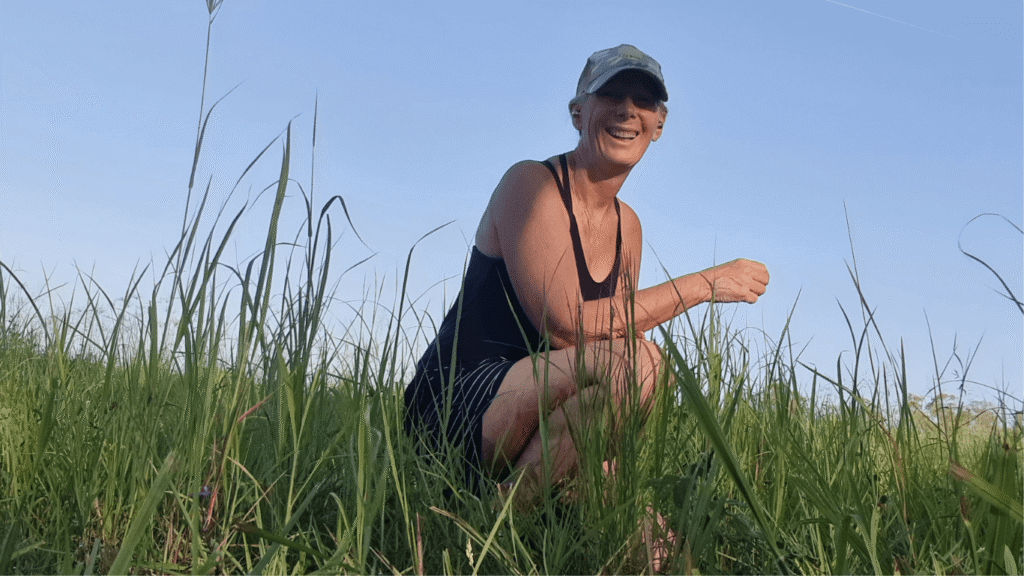
This week, find your floor. Literally — get down on the ground and get back up. Notice how it feels. That’s the work. That’s who better than you looks like in real life.
Plus, head out and grab Will’s book — it’s a hoot and really does help you think about “doing more”.
PS. The person best qualified to change your life? You already know her.